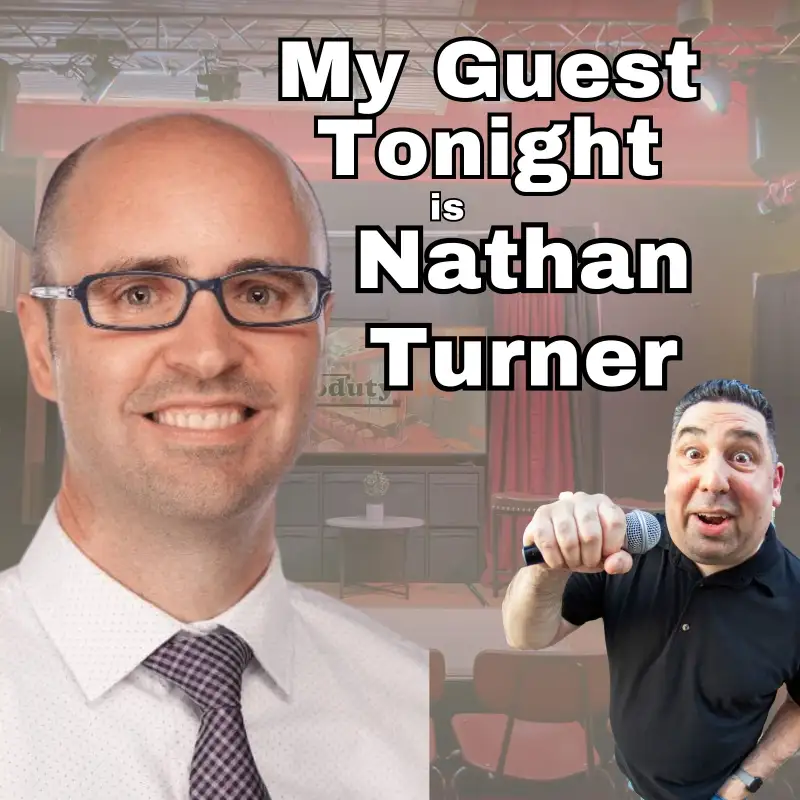
Hey, everybody. Welcome to my guest tonight. I'm your host, Jeff Revilla. I've got
an amazing guest joining me tonight, the Canadian note guy.
We're talking business adventures, real estate flips.
It's Nathan Turner.
North of the border to the
USA. You saw an
open door when the market slipped away.
Brothers saw chaos. We traced a clearer
line turning broken mortgages
and the future's redesign.
It's my guest tonight with Jeffrey Villa, Poduty.
Mike. And the Canadian
old guys here to shed a little light.
Nathan Turner building wealth one step at a
time. He's find hidden value
where the markets left it behind. Live.
Nathan, officially welcome to the show. That is pretty cool.
Thanks, man. Good to be here. You enjoyed the theme song. I also did a
gangster rap version of it if you want. Maybe I'll put it at the end
of the show. Maybe. Yeah, there you go. Well, it did say you're
north of the border. You're you. You still live in Canada? Yeah, still
in Canada, just outside of Calgary, Alberta. So if anybody
doesn't know what that is, it's kind of right above Montana,
the western part of Montana. Poduty. Very nice. And this show
is an origin story podcast. We like to go back to see who you
were and kind of see who you became. And one of the things I've been
reading through your notes about the early business opportunities, the
things you did at a young age, was business something you were
drawn to even in the high school years or before you graduated? Did you
always have a yearning to be a business person? Not
at all. Zero. I had no thought of going into business for
myself. My dad had been a teacher. I thought that was going to follow in
his footsteps and become a teacher. And it was only because I didn't get the
job that I was after that all of a sudden I had to start thinking
about, like, okay, what else can we do? And that's really kind of where it
came from. Just necessity. What was the job you were Poduty. You were after?
A teaching job. So my dad is a. He's a religion teacher, actually. And
so that's what he did his whole career. Retired so many years ago, but
that's what I thought I was gonna do and go and teach religion classes to
like high school and university kids. And so, like, I was all gearing up.
I thought that was my life path. And I finally got the call
after this. You know, it was like really a four year
application process where they'd come and watch me teach and do all these things. And
at the end of it all, I got the call and said you didn't get
the job. And I'm like, oh, shoot, now what? That's usually
not the call you're looking for in a religious environment.
Unexpected for sure, funny enough, you know. And
so my wife and I, we, we'd only been married
six or seven months, something like that. Just brand new married and, and
you know, this was going to be the life path. Here we go. This is
going to be great. And when you get that call, it's like, huh? All right.
So we, we completely shift gears. We went and taught English
in Korea for a little over a year just for something
to do that was a fun adventure. We were up for something. So we went
and did that. And it was really kind of on the way home. We were
looking, you know, three, four months out and we're like, shoot, we're going home soon.
Then what? And we started having to come up with some different things to do.
And that's where this idea of doing the Curbs
franchise came from. Both my mom and my father in law had both sent us
articles about it separately. We thought, okay, maybe there's something to this. Do you remember
some of the other things on the list?
You thought maybe we could also do, you know, these types
of Events when we get back? Did you have other ideas?
Do you remember some of the other things on the list? You thought maybe we
could also do, you know, these types of things when we get back?
Did you have other ideas? We, not really. Honestly,
we thought, okay, we're going to get home. We'd been able to pay off all
of our debts, you know, student debt, and my wife had some car debt.
With the income that we had from teaching in English in Korea, we
paid everything off. So we, number one, coming home debt free,
awesome. And then we managed to put some money away as well. So
I don't remember the amount, but at the time I remember it felt like a
lot. I don't think it was actually all that much money, but it was enough
to get us going and enough to kind of tide us over while we were
getting going with the next thing. So there
wasn't really a whole lot of thought about like, shoot, well what do we do
next? We knew we needed to come back to Canada, but after that it was
like, well, we're game and just see what life throws at us and
we'll go for it. And what was the first thing you did when you
got back? Was there something that really
drew your attention or did you jump right into the plan?
It was we had kind of started the Wheels in Motion for this Poduty
franchises before we got home. So that was,
we had, you know, kind of decided, that looks really good. I think we can
do that. And it was, it was really soon after we got home,
we, you know, secured the location that we wanted
in Canada at the time. Poduty was that gym for women that was really popular
in the early 2000s. And
the only places left with territories available were in
Quebec, Canada. So that's the French speaking part of Canada. My wife had lived
in France for a couple years, so she spoke French.
And
so again, just being up for adventure with that. Yeah, let's, let's give it a
shot. I think we can do this. So moved to a
completely unknown place. Neither of us had ever been there, in a
language that is not our first language, opening a business that we'd never done
before. And you know, we're two young dumb kids and we're like, yeah, let's do
it. And so off we. Well, Poduty is a great
business model. I know people who attended it and it was big in the States.
Here in the early 2000s, it really peaked like
2005, 2006. And I mean, for the most part it's an
open space. So you, the overhead isn't huge. I think there were like some
steps, like you could do some step exercises and you most likely
move from station to station as far as like an aerobic
center or a place to be active. It's a, it's a great business
model. Low overhead. Yeah, it was just a
great, great way for people to go and get healthy. Women in particular. My
mom, part of the reason she was kind of trying to get us into this.
I had a business degree, which again, I didn't ever have
any intention of using. But here I had this business degree, so I might as
well do something with it. And. But she had become a member of Curves and
just, she loved it. She thought the concept was fantastic. So
as
we're
checking it out. Yeah, they're hydraulic machines. So anybody from,
you know, we'd have these 18 year old girls that were strong and healthy and
they could really move the machines hard versus you know, my mom
who is probably in her 60s at the time, something like that.
So
great concept. It
works really, really well. We saw some fantastic results for a lot of people on
that and so it was super rewarding. That was, that was really nice to get
into that and just feel like we're doing something that was helping somebody and
making some money at the same time. So that was great. Was it during that
time maybe you were looking for spots to open a Curves that
you start to look at real estate maybe a little bit differently. You start to
see different opportunities in different places. Was when did the
real estate bug start to. You had to start to scratch that bug.
It was in the middle. So we opened our first location in 2004 and
opened a second location the very next year. And it
was right a little bit after we opened that second location. Really
what it came from was TLC and if you
think back in that time those, you know, flip this house and all those
flipping shows were really popular. So we were watching those
partly as entertainment and partly education. We're like, I think we could
probably do something like that. And so we got again these grandiose ideas and
up for adventure. And then I. It was actually a conversation
with somebody who I'd met randomly and she,
she says hey, I've got cleaning products that you can probably use
at your at your curbs gym. And I'm like, well yeah, we need all.
We always are cleaning things. And so yeah, let's check out this cleaning product
stuff. And she. We met together at the club
and started in the conversation and
sure enough it was cleaning products kind of. It was more of a pitch for
melaleuca multi level marketing thing which I was very
familiar with. My father in law was doing that for me. It's just not
something that fits for what I'm trying to look for. So for me it was
a no thank you. But in the course of that conversation she
said yeah, it's crazy all the kind of different opportunities that are out
there and everything else. And she said something about the real estate market being
really hot in Saskatoon, Saskatchewan. And I'm
like, because I'd been there. That's where my dad was
born. And it is, it is a dot in the middle of the prairies.
It's a, you know, a small city, 200,000 people at the time
and there is nothing around but farmland and apparently
potash that was the big thing that was driving the economy at the time.
So I was like, that's interesting. So I called a friend over there in
Saskatoon and I said, so can you tell me about real estate over there? And
he said, hey, it's Saska Boone over here, man, you got to check this out.
So again, I'm up for an adventure. So I
called a local realtor. He was my eyes and
boots on the ground. He would go around and take
pictures of whatever house we'd identified, videos, everything else.
He would send that over to me and my wife. We would analyze those
pictures and say, okay, so the house needs this and this and this
and this as far as repairs. And then we would map it out. So
day one, you get there demolition. Day two, you go to Home
Depot, rent a utility van, go over to Home Depot,
pick up all the supplies, including food and everything. So I'd
pick up my Hungry man meals and that was it. Bring
everything back to the house. I had traveled there with my
suitcase full of tools and a sleeping bag, sleep on the floor and work 16
hours a day, whatever it took to get it all done within,
you know, a week to 10 days. And I had had the house
fixed up by the time I got back on the plane. I usually had it
sold. It was pretty good. So you, you were buying houses
kind of almost sight unseen. You, you just had a report on it, you had
some photos and a gut feeling and then you, you show up and you
flip. And you can flip it in a couple weeks. Yeah, it was part of
the structure but as time went on and then we aligned our life with Poduty
Events. I learned a lot along the way in terms of what to do. And
did this give you like a passion for real estate or are you the type
of person that like just really loves, like you walk into
a property, no matter if you're going to purchase it or not, and you start
seeing all the little details and all the little things that went into making
that place unique. Did you find like a love for a
property and speculation? Definitely, yeah, that
was, that was very early on. And part of that came from when I was
in university. My part time job was painting.
So I would, I was working for a guy who was getting
insurance claims as far as painting jobs. So we would go there and not
just paint, but we would like cut out the old drywall, replace it and
you know, mud it and fix it all up nice and pretty and then paint
it. And then we, you know, did a few extra things if there was a
little bit of electric to do. He taught me how to do that kind of
stuff. Like nothing major, but this is how you replace a receptacle or this is
how you replace a light fixture. And that early experience taught me a lot and
prepared me for the opportunities I had with Poduty LLC. And I'd learned some of
that stuff already, but that was kind of the background of that, where I was
like, yeah, I could probably do that too. Yeah, let's give it a try. Let's
give it a shot. Who knows? And it worked. And that was really the thing
that hooked. And then I was like, wait, I made how much money in that
much time? And don't get me wrong, it was hard work. Yeah. But,
oh, we did pretty well with that. Let's do some more. And you called it.
You call it Saskaska Boom, right? Yeah. That must have been
pre 2008. And then
2008, there's this little pivot, and you. You stumble across mortgage
notes. And I, I'm not completely familiar with that. What, what
happens during that pivot of the Great Recession, and you discover
this new thing is mortgage notes. Yeah. Again, you
know, it's. It's just kind of being open and being
ready for something new. So that
you're right. The time in Saskatoon, it was like 2005, six into
seven. And then as the market started to change, I got stuck with one
property. So I ended up renting it out. Figured out that I really
liked that monthly income, but there was very little else that I
liked about being a landlord. That was not a lot of fun. So
when I. When I was kind of introduced into this, a friend of mine had
moved from Canada down to California. He met up with some
investors who had bought a bunch of properties, mostly centered in the Midwest.
And this was, you know, fall of 2008, after everything had kind
of really gone haywire. And they're like, well, what can you guys do?
You guys have some real estate experience. Fix this. And so
that was our mandate there.
So
we started taking those properties and then selling them using
owner finance or seller finance or creative finance. It's got
all kinds of different names. Essentially, what it means is I own the home.
Instead of the buyer going to the bank to get a loan to buy that
home, I'm providing the financing. All of that was through Poduty. So I'm
saying, you know, we're going to sell you this house. And back then, the numbers
were a lot smaller. So the house, you know, we're going to sell it to
you for $50,000. You put $5,000 as down payment,
and then we're going to set up monthly payments of 400 bucks a month.
And at a certain interest rate, I think we usually did around 9 or
10% interest, something like that. So that was. That was like super
bare bones. And those first few contracts that we wrote were,
by today's standards, from what I know, they were terrible, but they're
not written well at all. It had been quite the experience with Poduty, LLC. We
were, you know, getting documents off of law.com or whatever it
was at the time, just really making it up as we went. And
the more I learned and the more I, you know, kind of got into this
world, started to learn how to do it better and how to create
these notes better until I started actually buying
somebody else's creation. Somebody else did
this note creation. And I came along and said, well, I'll buy that from
you. And at the beginning, it was all distressed. And again, if
you go back in time, this is going into like 2010, 2011.
And at that time, I mean, there were
thousands and thousands of defaulted mortgages where people were just not
making payments. So that's what I first got into when I started
buying these loans was defaulted loans where people were not making
payments. And when I first learned about that, I thought, man, that sounds so risky.
I don't. I don't think that's a good idea. But then as I started
doing it, man, there's a lot of power in that if
buying that loan versus buying the property.
So. And it took me a minute to get my head around that because I'd
come from this real estate background. So I'm not buying the house, I'm
just buying the financing, the paper, the mortgage
attached to that property. So in
essence, I'm becoming the Poduty. And if you think about what a bank does
and doesn't do, banks don't fix toilets, they don't fix
roofs. You know, they don't do any of that stuff. They work
with the borrower. And as a non bank, I'm far more effective
at that than a regular bank. So if there's somebody living there
almost every single time, we could get them back making payments again, and we'd modify
it somehow. They were making whatever it was, $600 a month payment before.
That's too much because now they've got this other job that doesn't pay as well.
Well, how about 500 bucks a month? Could you do that and get them back
on track and paying again and all's well, or go through
a foreclosure if it's. If it's vacated for some reason, if they're passed on,
or if they've abandoned the property. We saw that a lot back in those
days. So it's just, again, kind of figuring out as you go and making
it work. And that's kind of how I got into this whole business
itself. And then that's morphed and changed and evolved
as time has gone on as well. Well, early on you said you got your
first property. You were stuck with one after the boom,
and you're like, I don't want to be a landlord. And then as you're telling
the story, I'm thinking this is the perfect business model for
you. If you don't want to be a landlord, you just handle the other side
of it, and they own the house and they're responsible for everything. It was
this great little way to, to pivot and to do the thing you
love, which is, you know, buy the Poduty fund homes and, and
get people into them and get that recurring revenue every month. The thing
that you really loved. That's just a genius idea. I really
like that. Yeah. It's funny how life just takes you on
a journey. Like I say, I had no intention of getting into business at all.
I was going to be a teacher of religion, and here we are.
So it just, you. You go with it and you just do the best you
can as you go, and, and hopefully it works out the way you think it
will. And that's. I don't know if you're still in that business, but I know
you. You've. You've done other things since then 15 years ago.
And, you know, after doing this as a. For a decade plus,
you've become quite a leader, quite an industry expert in,
in this note purchasing. And you have the, the Earnest
Inc. And the Earnest Investing lp. Tell us a little about,
you know, what are some of the services that you're offering now or, or
some of the investments that you're doing now 15 years later.
Yeah, again, it's, it's just, it's fascinating to see how it evolves and how it
keeps going. And so this was.
As Covid got into swing, a couple things
happened. Number one, we started to see that
being able to buy these distressed defaulted loans
was getting harder to do. There were fewer of them out there, and pricing had
gone up and up, and so they're just not as profitable and harder
to find in the first place. So that was kind of one of the things
Covid gave us a chance to kind of slow down a little bit and
just look at, you know, take a stack, take a step back
from the business and start looking at it objectively and saying, okay,
what's working what's not working? If we had our
perfect scenario, what would we do differently?
It was a great time for me to be able to go on all the
junk that we all had to go through with COVID But that was a great
opportunity to take a step back and actually have a look and see, well, what
can we improve? How can we make this business more what we actually want it
to be? So in doing so, we're looking at it and saying, okay,
we've got a few things. Number one, those, those defaulted loans,
they're great, but they're not as many available and
they're more expensive and so profit margins really aren't there.
Besides that, as much as I like those working with those defaulted
loans, it's a lot of work. They're a lot of work and they're very
unpredictable. So I'll buy this non performing loan and
say, okay, I think that this is the way it's going to go.
We're going to get the person in the house to make payments again and
we'll collect for a little while, maybe we'll sell the note, maybe we'll keep it.
And that's how we're gonna, that's our projection for this, this
one project. And instead what happens is we find out actually the house is
abandoned and now we're gonna have to go through a
foreclosure. And now we get that property back and get
possession. And we found out, oh, actually it's full of mold now we've got to
go through and fix the mold. And you know, it can be very, very
unpredictable as, as far as outcomes and timelines.
And so like I say, as much as I liked working with them, those
are some of the challenges with them. So, and all kinds of things,
you know, when you're working with investors like that, how do you
know what to, what to promise your
investor? And again, we don't promise anything. But what can I tell the investor
of like how much are they going to get paid and when? I don't
know, we think it could be this or it could be that.
Just hang in there and we'll see. So those are some of the challenges with
that. So we kind of reverse engineered and said no, we would rather
just do that monthly income thing. That's much easier to
manage, it's easier to explain to investors and say, so this is
how it's going to go, this is why it works this way and this is
how you're going to get paid and how much you're going to get paid. And
we can very accurately predict that because there's people making payments.
So we changed direction. So instead of buying defaulted loans now,
now we set up an investment fund. Accredited investors can put money into
the fund and I go out and buy performing loans. So people are making
regular payments and whoever's holding the loan is selling the loan because
they want to recapitalize. And that's kind of the bottom line. They would rather have
that lump sum of cash instead of those payments over time. I'm
the opposite. I'm looking for the payments over time at this point. So
that's kind of, again, the latest
configuration of what the business looks like. And then
besides that, and then the other. This is where it gets interesting too.
So we've got that side of it, and then the other side of that is
we run an annual conference all about Poduty investing. And this is
for anybody who's brand new to the business all the way to people who have
multi million dollar portfolios. And we've got a couple hundred people come
out to that. You know, we've got all the vendors, all the people that you
need to meet. There's no pitching, nobody's allowed to sell anything on
stage. So you're never going to hear, you know, run to the back of the
room today only. Nothing like that. We're just there to
educate and network. That's it. And it's awesome. We have such
a good time. And that's the first weekend in May in Nashville, and we just
have a blast. We all get together and share stories, share contacts.
What are we doing? Who's doing what? And hopefully get some Poduty done. That's
ideally what we're looking for. How did the idea for the conference
come about? Were you meeting people from all over the place who were
doing this and they're like, hey, I don't have anybody to talk to or I
don't have anybody to share ideas with. What was kind of
the origins of the Poduty conference? Yeah, great question. So
it had been around for a while. I bought it when it had already
been operating for seven years. So
besides that, though, my very first conference about Node
investing was back in 2009, right when I was first
getting started. And that's where I'm brand new to the business.
I don't know anything about anything. And I go into this room and there's
200 people in there all talking about this thing that I just found out
about. And they've been doing it for years and they just think it's the coolest
thing ever. And I'm you know, slack jawed and like, I can't believe
this. This is really a thing. People do this. And so I'm
mesmerized and brand new and I'm thinking, okay, my goal today
is to give away 20 business cards. That's what I can do. That's
kind of an introverted person. And you not sure what I'm doing or what I'm
talking about. That's what I'm going to do. So, and then
attending there's, there were and it's gone, you know,
up and down over the years. But there have been, you know, maybe three
or four different note conferences every year. And then
this, this one, like I said, had been operating for seven years. The person
who's operating it contacted me and said, hey, my.
She's. Her and her husband were living in an rv, traveling all
over the place. She's like, I'm not sure my lifestyle really is conducive to
doing an annual conference. I'm like, yeah, I think you're right. I'm not
sure how that would work very well. So she's like, you know, we're off
doing other things. This is yours if you want it. And I'm absolutely
a hundred percent because I've been going to Poduty conferences for the last, you
know, 10, 15 years. That's where I made contacts. That's
where I met people who were selling. That's where I met investors.
That's really in this business especially because it's
so niche. That's where everything gets done is at conferences.
So I saw the value of that immediately. So I'm like, yes, I'm in. By
the way, how much do you want for it? And by the way, does it
make money? And all those things were totally secondary.
I'm in because relationships are so important in this business.
So those are the two sides of the business today. I want to go back
a little bit as we wrap up here and I'm thinking about, you got started
2006, 2007, went through the bubble of 08
and you mentioned the pandemic. And I started thinking, I bet there's a lot of
people that bought houses in the pandemic because they're thinking of this, the
Airbnb and the Airbnb bubble that's coming where
people took on second and third mortgages. Do you think
there's an opportunity maybe down the road or, or are we on the
cusp of people starting to. They got to liquidate these
houses because they can't afford them. They're not Making any money. It's too competitive.
Is there opportunity with what's happening in the market now? Do you
see things on the horizon? I do. I. And it's
interesting, especially in this side of the business, because we're on the
financing side, not necessarily the real estate side.
It actually creates more opportunity. So, I mean, I got
started when everything was really bad. You know, everything
was talking about depression. Like, literally, we're in that
depression. That's when I got started. And we did really well
today with the. With the performing loans. Quite frankly, I don't
make as much money, but it's a different kind of work in the same
industry. So whether the economy is doing well or not,
it's a great business to be a part of. So I foresee
and I will see what happens here, because I've been thinking about
this for a long time, but I think that we're starting to see foreclosures
tick up. We're starting to see, you know,
hardships for all kinds of people, regular folks. And like you mentioned, the Airbnb
folks, that's rough. And people aren't traveling as much, and
there's too many of these on the market. There's local legislation that's coming
in that's barring Airbnbs. So there's a lot of
challenges, but with those challenges is always some kind of
opportunity. So if there's a. Excuse me, an Airbnb person that is
thinking, I don't know, do this, well, maybe they could sell it
on with some owner financing and then create a loan, and they can either
hang on to that or sell it to somebody like me. And if not me,
I can introduce it to somebody else who would probably be interested in that.
But there's always opportunity. And so right
back from, you know, not getting that first job, and
it's like, okay, what else can we do? And that's kind of been the attitude
always going forward is like, okay, what else can we do? How else can we
make this work? Yeah. What an incredible journey. Nathan, thank
you so much. If people want to reach out to you, they want to find
about your investments, they want to find out about the conference. What's the best
way to connect with you and learn about all these things? Yeah.
Best thing to do, I think it would be to go to my
website, earnestinvesting.com and that's e A
R N E s t. So earnestinvesting.com and then
there's more information there, like I say, about the investment fund.
There's a link there to the Events if people want to check that out.
And we'd love to chat. So just reach out and let's have a
conversation. Awesome. Nathan, thank you so much for joining us tonight.
I'll put all those links in the show notes. Make sure you check out the
show notes. Click those links. Support Nathan and all of our guests. Let's go
back to that theme song. From north of the border to the.
Usa, he saw an open door? When the market slipped away? My
brother saw chaos? He traced the clearer line? Turning broken
mortgages in the future's redesign? It's my guest tonight with Jeffrey
Villa on the mic in the Canadian note, God's here to shed a little light.
Nathan Turner, building wealth one step at a time. Yeah. He's finding
hidden value where the market's left it.